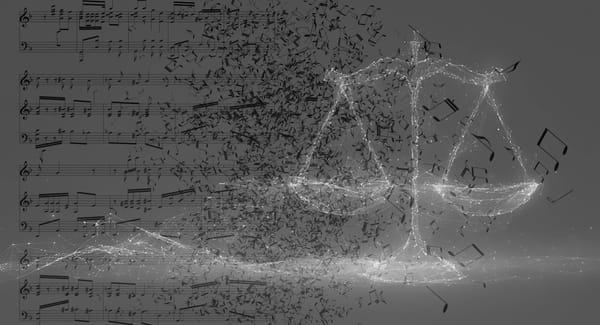
From Bowie bonds to copyright shares. How Authenta Invest implements the financial architecture Bowie imagined
David Bowie's 1997 securitization of his music catalog raised 55 million dollars by treating songs as engineered financial infrastructure. Today, Authenta Invest applies the same logic through CopyrightChains v9.4, the blockchain powering Music Community Internet Media.


Loading...
Verify on BlockchainThe platform turns any catalog into programmable "Bowie shares" via Wyoming Series LLCs and USDC/USDT settlement. AI monitoring recovers 4.3 billion dollars in missing royalties worldwide, while smart contracts distribute payments in 60 seconds rather than six months. Where Bowie needed Wall Street structuring for one superstar catalog, the NIM ecosystem now offers institutional-grade copyright tokenization infrastructure for working artists and mid-tier portfolios.
Bowie's architectural thinking beyond songwriting
Today marks the birthday of David Robert Jones, born January 8, 1947, whose stage name, David Bowie, became synonymous with transformation across music, visual arts, and business strategy. While his artistic legacy includes personas from Ziggy Stardust to the Thin White Duke, his most lasting innovation remains unseen by most listeners: treating intellectual property as a carefully designed financial infrastructure.
In 1997, Bowie issued the first asset-backed security based on music royalties, raising $55 million against future cash flows from his pre-1990 catalog. A special-purpose vehicle separated royalty streams from 25 albums, covering roughly 300 compositions, transforming unpredictable artist income into a rated, fixed-income product purchased by Prudential Insurance at a 7.9 percent coupon over 10 years.
This structure provided instant liquidity without giving up long-term ownership, shifted forecasting risk to institutional investors, and established market prices for assets often considered too unique for standard valuation. Bowie effectively viewed his creative work as infrastructure similar to toll roads: steady revenue based on confirmed usage patterns.
Yet, the transaction faced technological limitations that restricted wider use. Royalty verification relied on aggregated quarterly reports from collection societies, resulting in information gaps and delays of several months in payments. Fraud detection remained manual, which allowed systematic underreporting to weaken cash flows. Most importantly, custom legal engineering and investment banking fees made the model financially viable only for global superstars, leaving out working artists and mid-tier catalogs.
Authenta Invest. Institutional infrastructure
Authenta Invest functions as an institutional investment vehicle that applies Bowie's core strategy through advanced technology infrastructure not available in 1997. The fund secures exclusive rights to manage copyright portfolios rather than purchasing the underlying assets, thereby maintaining creator ownership while offering investors predictable cash flows from AI-optimized royalty streams.
Transform copyright monetization through blockchain-enabled infrastructure that delivers 98% royalty retention to rights holders while maintaining institutional-grade security and regulatory compliance.
This administration rights model enables broader diversification across catalog segments, geographic regions, and revenue sources by requiring less upfront capital. Advanced AI monitoring identifies $4.3 billion in previously uncollected music royalties worldwide, turning systematic leakage into recovered revenue streams. Dynamic pricing algorithms adjust licensing fees based on real-time demand patterns, boosting monetization by 68 to 142 percent for music assets and 92 to 210 percent for video content compared to static rates.
All investor distributions are settled in USDC or USDT stablecoins, eliminating cryptocurrency volatility and allowing valuation based solely on copyright fundamentals. This makes investments yield-bearing contractual obligations backed by verifiable revenue streams, rather than exposure to speculative digital assets. The legal structure uses Wyoming Series LLCs, where each series acts as a separate sub-entity holding specific intellectual property assets, with comprehensive legal protections to shield investors from liabilities across series.
Operational demonstration on CopyrightChains v9.4
While Authenta Invest provides institutional-scale capital formation, Music Community Internet Media showcases the underlying technology functioning at a commercial scale. The platform operates on CopyrightChains v9.4 infrastructure, processing thousands of verification requests per second through a permissioned blockchain architecture.
Artists register their works and receive automated royalty distributions in USDC and USDT, with settlement occurring approximately 60 seconds after verified usage, rather than the 6 to 24 months' delays typical of traditional collection societies. Smart contracts perform complex multi-party royalty calculations without manual effort, removing the need for payment reconciliation.
The platform employs a user-centric distribution model where subscriber payments go directly to the artists those specific users listen to. Conservative estimates show significant value creation: if just 1% of Spotify's 11.4 million systematically excluded artists join Music Community Internet Media with 50 dedicated subscribers each, they could collectively generate $433 million in annual income, about 9 times the royalties currently lost to threshold requirements.
Beyond distribution economics, the platform incorporates advanced fraud detection features. Behavioral intelligence engines differentiate genuine user engagement from coordinated manipulation by analyzing timing patterns, geographic distribution, device fingerprinting, and consistency in listening behavior. The system detects playlist manipulation and artificial streaming inflation with 95% accuracy, reducing detection time from months to minutes and safeguarding revenue streams that support institutional investments.
From Bowie bonds to programmable copyright shares
The structural similarity between Bowie's 1997 deal and Authenta Invest's current approach shows how technology has shortened the gap between idea and implementation. While Bowie needed investment bankers, insurance underwriters, and custom legal structures to securitize a single catalog, the NIM ecosystem offers standardized infrastructure that lets any catalog access similar financing through programmable tokens and smart contract automation.
The 1997 special purpose vehicle converts into a Wyoming Series LLC with on-chain representation. The fixed-coupon bond transforms into a tokenized revenue stream that settles in USDC or USDT, with transparent, real-time reporting. The passive royalty forecast becomes an actively optimized cash flow protected by AI monitoring and enhanced through dynamic pricing. The investor base, limited to qualified institutional buyers, expands via compliant token standards and programmable securities frameworks.
The Power of the Content staking mechanism introduces an active management layer that traditional securitizations lack. Catalog owners stake NIM utility tokens on specific works to boost algorithmic visibility, gain access to enhanced analytics, and earn passive income through platform fee distributions. Advanced algorithms analyze engagement metrics, content quality scores, stakeholder amounts, and temporal relevance to determine content prioritization in discovery systems and licensing recommendations.
This mechanism transforms catalog curation from subjective artistic choices into clear, incentivized strategies that can be measured through on-chain activity and linked to revenue performance. Rights holders show confidence in specific works by allocating capital, establishing market discovery mechanisms for underutilized catalog assets similar to how equity markets identify undervalued securities.
Implementation mechanics and market positioning
Catalog owners collaborate with authorized administrators to register works by thoroughly documenting authorship, contributor splits, and existing encumbrances. Copyright office filings are verified to enhance enforceability and establish a clear chain of title. Registered works are allocated to suitable series within the Wyoming LLC structure, with each series receiving a unique issuance that represents beneficial interests in that specific portfolio segment.
The blockchain infrastructure creates a cryptographically immutable CopyrightID. These identifiers cannot be altered, duplicated, or forged, providing mathematical certainty for legal and financial transactions. AI-powered monitoring systems track usage across 240 platforms worldwide, automatically generate licensing agreements, and collect royalties in real-time.
Authenta Invest focuses on undervalued and under-monetized catalogs where systematic revenue leakage, weak enforcement, and static pricing create opportunities for technology-driven performance improvements. Traditional royalty investment funds lack the infrastructure to achieve CopyrightChains' operational efficiency, relying on aggregated quarterly reports and manual reconciliation. Private equity catalog acquisition strategies target established catalogs at premium valuations with limited technological enhancements, aiming to generate returns through financial engineering rather than operational improvements.
From innovation to infrastructure
David Bowie's lasting influence on the music business structure is rooted in the conceptual framework his 1997 deal created: viewing creative output as programmable financial infrastructure rather than cultural artifacts with incidental commercial value. This outlook forecasted the merging of blockchain technology, artificial intelligence, stablecoin settlement systems, and regulatory frameworks that now support systematic deployment via platforms like Music Community Internet Media and investment vehicles like Authenta Invest.
January 8, 2026, marks a key inflection point in the maturity of copyright asset tokenization infrastructure. CopyrightChains v9.4 has completed roughly 80 percent of its core technology platforms, placing the ecosystem at a crucial transition between early speculative adoption and institutional deployment phases. The upcoming zero-knowledge blockchain upgrade will remove the main technical barrier to large-scale institutional adoption, enabling privacy-preserving compliance verification across 140 jurisdictions.
Where Bowie needed Wall Street expertise to execute a unique vision, modern rights holders access standardized infrastructure that incorporates these principles into repeatable, scalable processes. The special purpose vehicle becomes a Wyoming Series LLC. The insurer bond purchaser becomes a diversified pool of NIMPI token holders. The quarterly royalty statement is replaced by real-time blockchain verification with sub-minute settlement. The passive catalog becomes an actively staked, algorithmically optimized revenue engine.
On his birthday in 2026, the most fitting tribute to David Bowie's business vision recognizes not just what he achieved with the resources and technology of his time, but how deeply his core insights now shape the financial infrastructure that allows creative work to generate, defend, and distribute economic value in digital spaces. The Bowie bonds remain a historic milestone. The logic they embodied now functions as foundational infrastructure.